Transjakarta Shares Electric Bus Best Practices at Bangkok Climate Action Week 2026
Reported by Aldi Geri Lumban Tobing | Translated by Nugroho Adibrata
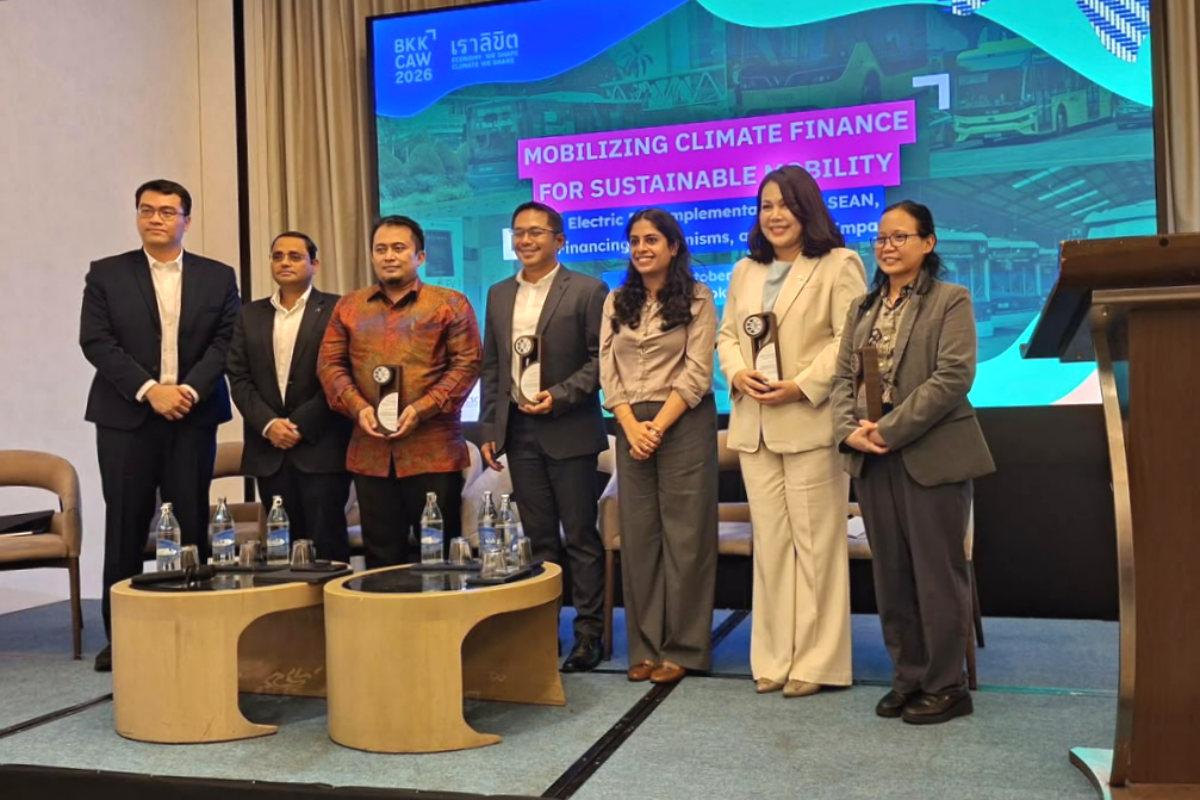
City-owned bus operator PT Transportasi Jakarta (Transjakarta) proudly shared its success and experience in operating electric buses at the international forum Mobilizing Climate Finance for Sustainable Mobility, held at Novotel Bangkok Sukhumvit 20, Thailand, Thursday (10/8).
We are exploring every avenue to speed up zero-emission transit in Jakarta
The milestone solidifies Transjakarta’s ambition to lead Southeast Asia's clean energy transition in public transport.
Organized by Institute for Transportation and Development Policy (ITDP) and MicroSave Consulting (MSC) as part of Bangkok Climate Action Week 2026, the forum explored creative financing models to speed up bus fleet electrification across Southeast Asia.
Transjakarta Reaffirms Ban on Busking in Mikrotrans and Bus StopsSpeaking alongside senior transport planners from National Development Planning Agency (Bappenas), Thailand’s Office of Transport and Traffic Policy and Planning (OTP) , and ITDP, Operations and Safety Transjakarta Director M. Deddy Gamawan highlighted the human impact of green mobility.
He pointed out that electrification has elevated passenger satisfaction on the ground: commuters experience whisper-quiet interiors, remarkably smooth rides, and the comfort of knowing their daily journey produces zero exhaust emissions.
The program marks a key milestone toward Transjakarta's goal of achieving a 100 percent electric fleet by 2030.
“Electrification isn't just swapping buses; it’s building a complete ecosystem of vehicles, smart charging grids, and skilled technicians. We are passing on Jakarta’s operational playbook to help ASEAN cities go green faster and smarter,” he explained.
Deddy noted that going electric also makes strong financial sense: e-buses run about 5 percent cheaper per kilometer than conventional buses.
“This outstanding efficiency is powered by major reductions in both fuel costs and scheduled maintenance,” he added.
Building on this momentum, Transjakarta is teaming up with key partners to expand mega-depots and reinforce stable power supplies.
The company is currently reviewing multiple creative financing routes to bankroll the transition.
“From green bonds and blended finance to carbon credits, Public-Private Partnerships (KPBU), and battery leasing, we are exploring every avenue to speed up zero-emission transit in Jakarta,” he stated.